
.jpeg)
Chitwan Through the Year: A Loose Guide to What's Out There and When
The jungle doesn't run on your schedule. But it does run on a rhythm — and once you know it, you can plan around it rather than guess.
This isn't a rigid calendar. Wildlife is wild, and Chitwan has a way of surprising you in every season — a tiger print when you least expected it, a hornbill appearing in the middle of the monsoon, a rhino standing in the mist like it's been waiting for you personally. What follows is more of a gentle guide to what the forest tends to do, and when.
Useful, we hope. Not gospel.
October – November: Everything Opens Up
The rains have finished their business and moved on. The skies clear almost overnight. Suddenly you can see across the grasslands again, the mud paths are walkable, and the whole forest seems to exhale.
This is when Chitwan is at its most generous. The temperature is comfortable — warm days, cool evenings, long-sleeved mornings on the veranda. The tall elephant grass is still up (it gets cut in January), which means excellent cover for the animals — and excellent reasons to have a guide with you who knows where to look.
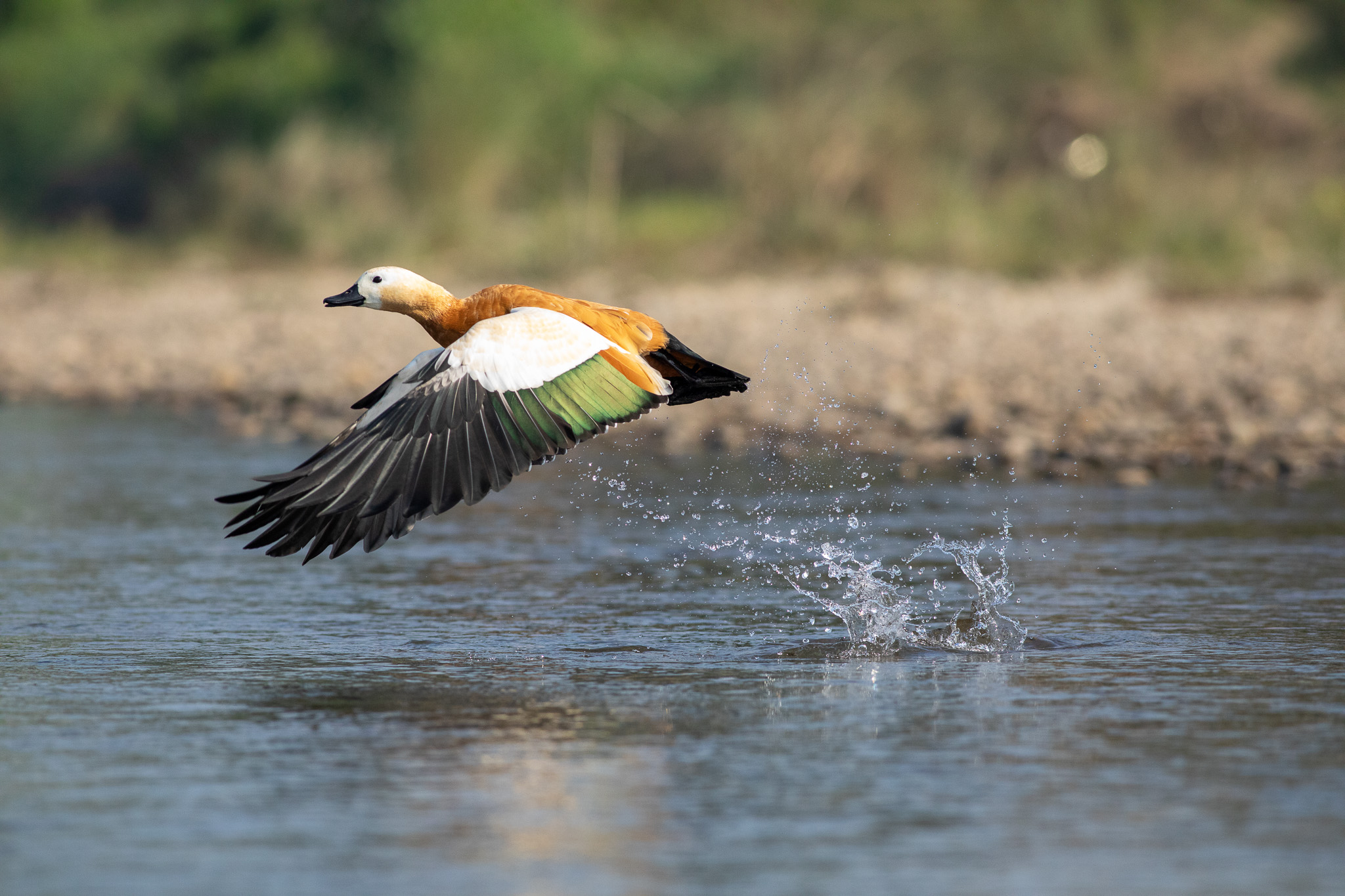
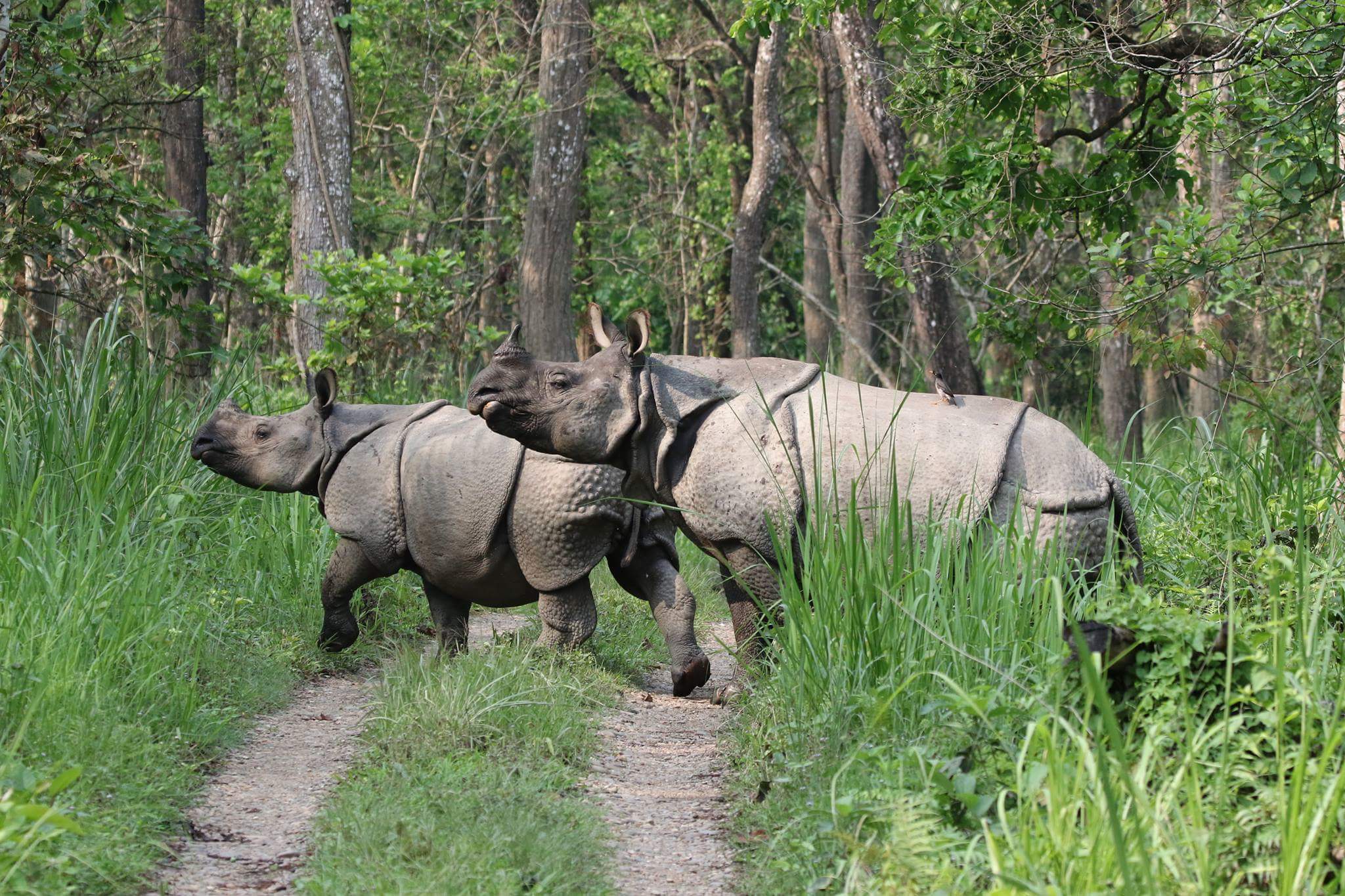
Rhinos are out and unhurried, grazing in the open clearings at dawn. Spotted deer are everywhere. Gharials are sunning themselves on the Rapti sandbanks in proper numbers. And the birdlife — kingfishers, hornbills, storks — is just warming up for the winter migrants that arrive through November.
It's also when Tihar and Dashain bring a particular energy to the villages along the buffer zone. Worth wandering through with a guide if you're here.
Suggested from us: Sunrise Birdwatching, Jungle Walk, Canoe on the Rapti.
December – January: The Mist Season
Cold mornings. Proper ones. The kind that make you grateful for long socks and a second cup of something hot before you head out.
The river mist is the thing in December and January. It rolls in off the Rapti in the early hours and sits over the grasslands until mid-morning, turning the whole landscape into something a bit otherworldly. Photographers tend to go slightly feral about it. Rightly so.
The elephant grass gets cut in January — a tradition that opens up the park grasslands dramatically. Once it's down, visibility improves, and wildlife is suddenly much easier to spot in the open. Rhinos become almost predictable. Sloth bear sightings tick up. The winter migratory birds are fully in residence: waders, raptors, and various ducks along the river.
It's the most popular time to visit for good reason. Book early.
February – March: Breeding Season and Birds in Their Best Colours
The days warm up gently. The forest starts its spring shuffle — birds singing more loudly, animals a bit more active, the sal trees doing something quietly spectacular with new leaves that come in rust and bronze before settling into green.
February and March are excellent for birds in breeding plumage — peafowl displaying, paradise flycatchers in full trailing-ribbon mode, bee-eaters and rollers catching the light. Migratory species are starting their return journeys, so there's an overlap of residents and visitors that keeps the birdwatchers busy for hours.
Spotted deer and hog deer are in rut. Rhinos are active throughout. The grasslands are open and easy to move through. It's a good, unhurried time — not peak season crowds, not deep-jungle heat. Just the forest doing its thing at a pace you can match.
Suggested from us: Sunrise Birdwatching, Tharu Village Walk (the village feels particularly alive in spring), Canoe on the Rapti.
April – May: Hotter, Quieter, and Worth It If You Know
The heat arrives properly in April. Most people head for the hills — literally — which means Chitwan empties out in a way that's actually rather nice, if you can handle the warmth.
The sal trees lose their leaves. The understorey thins. And with less vegetation in the way, leopard and tiger sightings — while still rare, let's be honest — happen a bit more frequently. Animals congregate around the remaining waterholes. There's a patience-rewarding quality to wildlife watching in April and May that peak season doesn't quite match.
The sloth bears are busy with the mahua flowers. Smooth-coated otters show up along the river with more regularity. And it's genuinely uncrowded, with guides who have more time and fewer groups to juggle.
Bring a hat. Bring two.
Suggested from us: Early morning Jungle Walk (5am start, serious), Canoe (cooler on the water), Tharu Village Walk at dusk.
June – September: Monsoon — The Forest at Its Most Itself
Some trails close. The rivers swell, the leeches appear, and the sky decides it would like to participate actively in your itinerary. Not for everyone.
But for the right kind of traveller, the monsoon is Chitwan at its most beautiful, its most atmospheric, and its most empty. The jungle turns a green that doesn't have a proper name — deep, almost aggressive, climbing over everything. The air smells of wet earth and something you can't quite identify but keeps making you breathe in deeper.
Birdlife peaks in the monsoon. Resident species are breeding. The resident gharials start nesting. Butterflies are everywhere — hundreds of species. Baby animals appear: young deer, young rhinos trotting alongside their mothers in the early morning, young monkeys making bad decisions in the trees.
The lodge is quieter, the guides are unhurried, and there's something to be said for having the veranda to yourself and watching a proper thunderstorm roll in over the sal forest.
Suggested from us: Lodge-based birdwatching (from the garden — honestly more productive than you'd think), Guided Walk in the buffer zone (lower trails), Canoe when the river allows.
The Quick Version
| Season | Best For | What to Know |
|---|---|---|
| Oct – Nov | Rhinos, deer, migratory birds arriving | Comfortable weather, grass still up |
| Dec – Jan | Everything — peak visibility, mist, open grasslands | Busy; book early; coldest mornings |
| Feb – Mar | Breeding birds, spring colours, uncrowded | Lovely transition season |
| Apr – May | Tiger/leopard odds improve slightly, waterhole wildlife | Hot; pack accordingly |
| Jun – Sep | Baby animals, peak birdlife, green season atmosphere | Some trails closed; quietest period |
Honest Advice
Come in October–March if you want the widest window and the most reliable conditions. Come in April–May if you want a quieter, rawer experience and don't mind the heat. Come in the monsoon if you're a particular sort of person — the kind who goes looking for beauty in unexpected places, doesn't mind damp boots, and would rather have a story than a clean itinerary.
We've seen extraordinary things in every single month. The jungle doesn't really have an off season. It just has different moods.
The trick is knowing which one you're walking into.
→ Browse our experiences and pick your season's walk.
Happy Lemon Tree Lodge sits just outside the Chitwan National Park in Sauraha, Nepal. Our jungle walks, canoe trips, and birdwatching tours run year-round with our local naturalists.